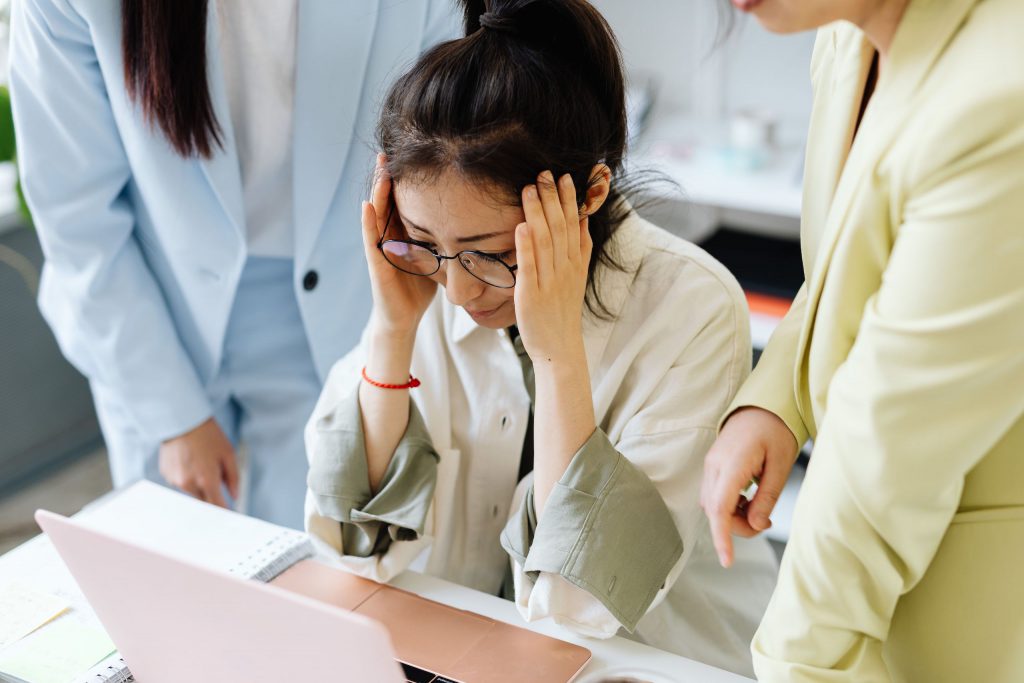
Women do twice as much invisible labor as men. From childrearing, to laundry, to grocery shopping, to family timekeeping. They’re the school’s default emergency contact, they’re keeping the family peace, they have to ensure everyone is fed. So it’s no wonder that we also face gender bias in AI.
On top of all of this, there’s the mental gymnastics of what to wear every day. Don’t be too revealing, but don’t look too buttoned-up and serious, either. Too casual? Too formal? A woman can’t walk into an office in jeans and a hoodie and expect colleagues to take her seriously. We are judged far more harshly by our outfits at work than men, which adds to the pressure.
Then, there might be the additional burdens of their own, or a family member’s, health issues — especially as they get older.
Many middle-aged women are responsible both for raising children and caring for their aging parents.
And women spend 25% more time in poor health than men, no doubt because of medical gaslighting, diagnostic delays, and the fact many medications and treatments were only tested on men. So we don’t actually know if certain treatments even work for women, because for too long (until the early 1990s) we were treated as “smaller men” in medical tests.
Plus, there’s the extra strain on the body that comes with periods. A woman’s hormones can drop 40-60% in just a few days, while men’s — if they change at all — will drop 1% in a year.
I feel exhausted just writing all that.
And let’s not forget, this is all before factoring in work itself.
Do more with less?
AI’s pitch it that it allows us to do more by freeing up tedious tasks. But it can’t do the invisible labor. It often simply means that employees do more with less colleague support, as businesses make employees redundant to fund ballooning AI budgets.
The goalposts are moving all the time, too, with the expectation of output increasing while the financial rewards don’t. Not for employees without shares, anyway.
AI amplifies the existing systems. That includes the invisible labor that women take on, both at home and at work.
Scanning the room to prevent bad moods from escalating, keeping everyone from panicking about AI taking their jobs, the list goes on. These invisible tasks don’t get any credit, but someone has to do them or the company culture falls apart. Just another way in which gender bias in AI shows up at work.
Name the invisible labor
Invisible labor doesn’t just happen at home. It just goes unnoticed at work because, well, the clue’s in the name.
From taking meeting notes, to organizing social events, to making the next round of coffee, it almost always falls on women.
But if someone can send an email and create a calendar invite, they have the basics to organize an event. AI can help them if they’re unsure. Isn’t that the whole point?
Gendered roles are so twentieth century. Gender bias in AI doesn’t need to continue them.
Remember AI can’t lead
The invisible labor that so often falls on women cannot be outsourced to AI. But the jobs we do to pay the bills can.
This is yet another aspect of gender bias in AI. It only adds to the stress and pressure women feel in workplaces that were never designed for us.
While the assumption is often that managerial positions are all about strategy, they’re increasingly becoming about emotional intelligence, too.
The best leaders know how to read the room and adapt accordingly; they’re strong negotiators and can keep their own feelings out of a situation. This is a skill that women learn from a young age. We’re taught that our emotions are inconvenient and so we must mask them, especially if we’re sensitive or neurodivergent.
Check your health insurance policy
One way you can support the women in your workplace is to ensure your health insurance covers therapy and diagnosing conditions like ADHD.
Many women are finding out in their 40s and beyond that they have ADHD, autism, or both, but not every insurance provider will cover the diagnosis or treatment.
However, getting the diagnosis can give women a new view on life and the challenges they face — including their ability to adapt to the increasing pace of change and gender bias in AI present in the 2020s. Change is often worse for neurodivergent folk, and the only suitable word for the current tech climate really is “rapid,” wouldn’t you say?
Support, diagnosis, and treatment can help them find adaptations and give them ideas for how you can make your workplace more accessible for everyone — and therefore more innovative, too, since the organizations on the cutting edge are the ones that have diverse leadership in every aspect of the word.
Connect your employees
Your employee groups are an important tool to support your team members in these strange times that we live in. They can share their priorities and challenges, and get advice from those who’ve been there.
Right now, community matters more than ever — it can often be what gets us through a tough spot.
The old saying “a problem shared is a problem halved” is actually true. Even just talking about what we’re going through can lessen some of the burden.
So, your ERGs, mentorship schemes, or even coaching can support your employees when they’re juggling more than the average workload. This can help them overcome gender bias in AI in order to continue thriving in your workplace.
Not getting the most from your employee groups? Workrowd can help. Better organize your groups, get your employees using them, and easily measure the results. Contact us to find out more.
Conclusion
Women risk losing ground in the workforce purely because of the additional societal weight that we have to carry. That doesn’t have to be the case, though. There’s plenty more that companies can do to support the women in their workforce and mitigate gender bias in AI.
And, by supporting women, they support all their other employees, too. It evens the playing field, allowing everyone within an organization to grow. It also creates a more welcoming company culture. Which can only be a good thing, right?
Stay tuned for part two, where we’ll delve into how businesses can support women in the workplace alongside AI adoption.